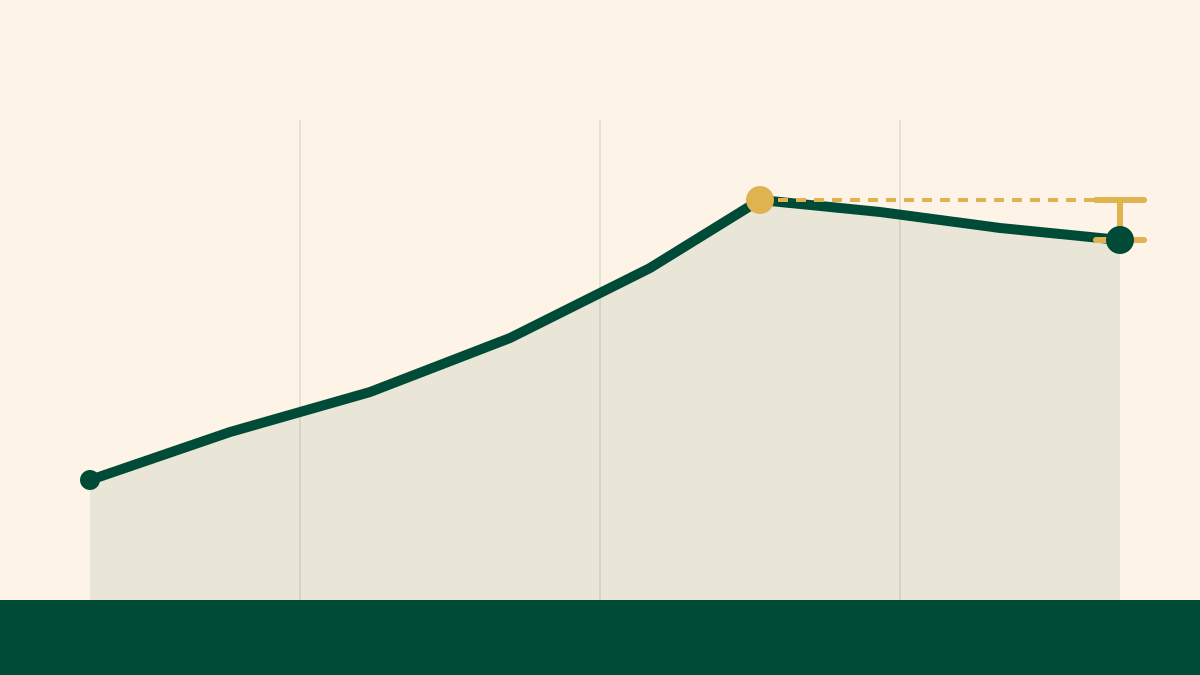
A correction is a fall of 10% from a recent high. The label describes the size of the fall — not whether it was justified.
3 min read
LISTEN TO THIS STORY
Marcus Bell reads his story, 2 minutes 39 seconds.
Listen on Apple Podcasts · Listen on Spotify · Subscribe in another podcast app
A market correction is a fall of 10% from a recent high.
That is the whole definition. No committee declares it. No bell rings. When an index drops 10% below its last peak, the market calls it a correction, the way a weather report calls 32 degrees freezing. It is a label for a size of fall, not a verdict on why it happened or what comes next.
Here is the everyday example. Imagine a stock you own at $100. It falls to $95. That is a pullback — normal, unremarkable, the kind of move that happens most weeks. It falls to $90. That is a correction. Same stock, same company, nothing about the business changed on the way down except the price people will pay for it. The Nasdaq did exactly that this week: its record close was 27,600 on October 6, and it closed Thursday at 24,315 — about 12% below the peak. The label fits. The label does not say whether the fall was justified.
The 10% line is arbitrary. It is a round number the market agreed on, not a law of nature. A 9% fall and a 10% fall are nearly the same event, but only one gets the name. And the name cuts both ways: a correction can be the market sensibly repricing a risk, or it can be panic selling a good business at a discount. The number cannot tell you which. Only the reason can, and the reason usually takes longer to arrive than the label.
Why it matters to your money: the word shows up in headlines precisely when it is hardest to think clearly. “Correction” sounds clinical, almost safe — but it is still a 10% fall in the value of the index your retirement account tracks. The useful question is not whether the label applies. It is whether the reason for the fall changed the value of what you own, or only the price. Prices recover from corrections all the time. Value is the slower question, and it is the one worth asking before you sell.
Sources: Nasdaq Composite record close 27,599.89 (October 6, 2026) and close 24,315.00 (November 5, 2026), Associated Press closing figures; S&P 500 and Nasdaq week figures from The Spark Board, edition 4.
KEEP READING
The Spark Board — the week’s numbers, including the Nasdaq’s fall into correction.
The Spark Dictionary — plain-English definitions of the terms the site uses.
165,000 Jobs, a Record Plunge, and the Phone Tax — this week’s roundup.
New posts by email
One short email when a new Financial Spark story publishes. No newsletter, no spam — unsubscribe anytime.