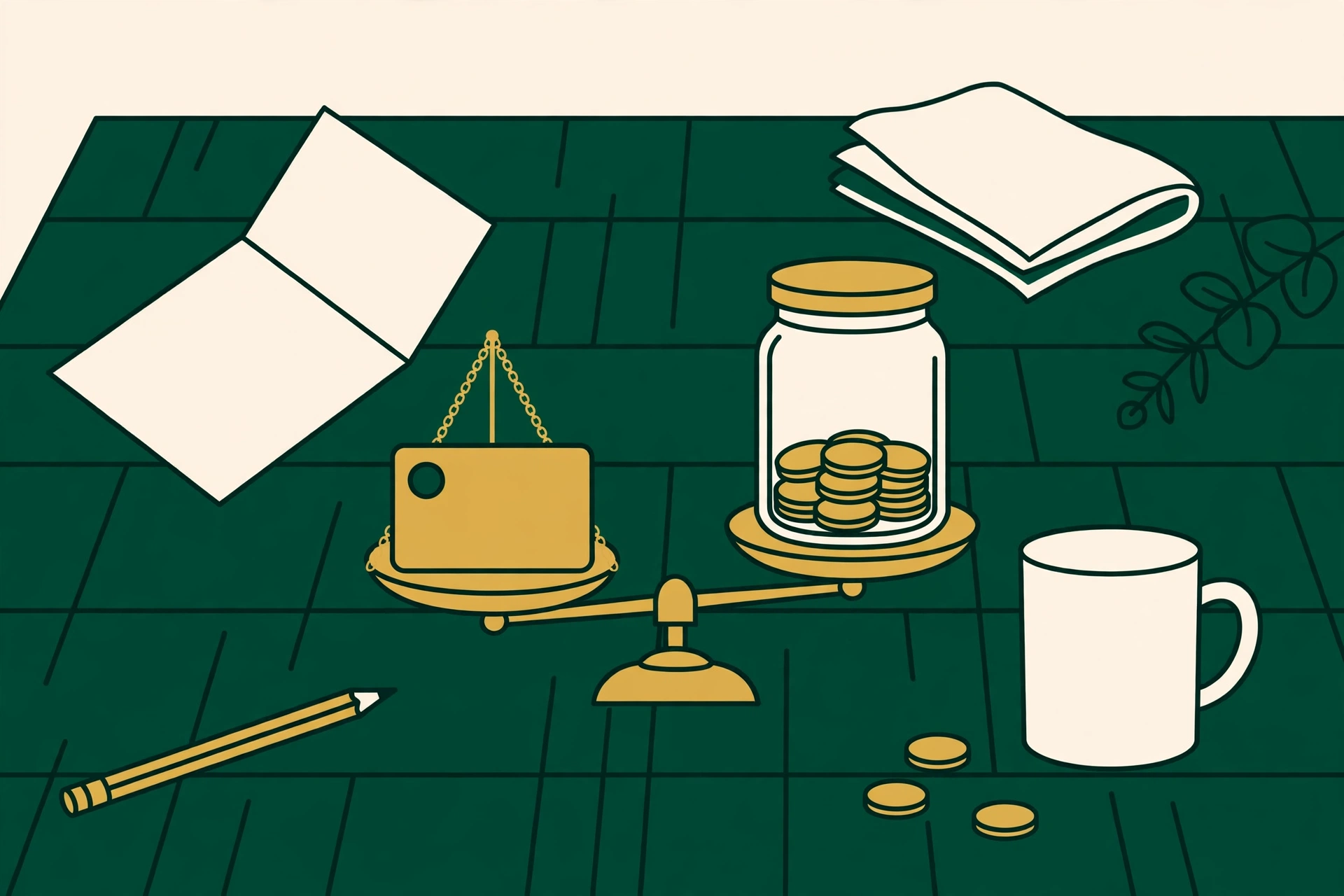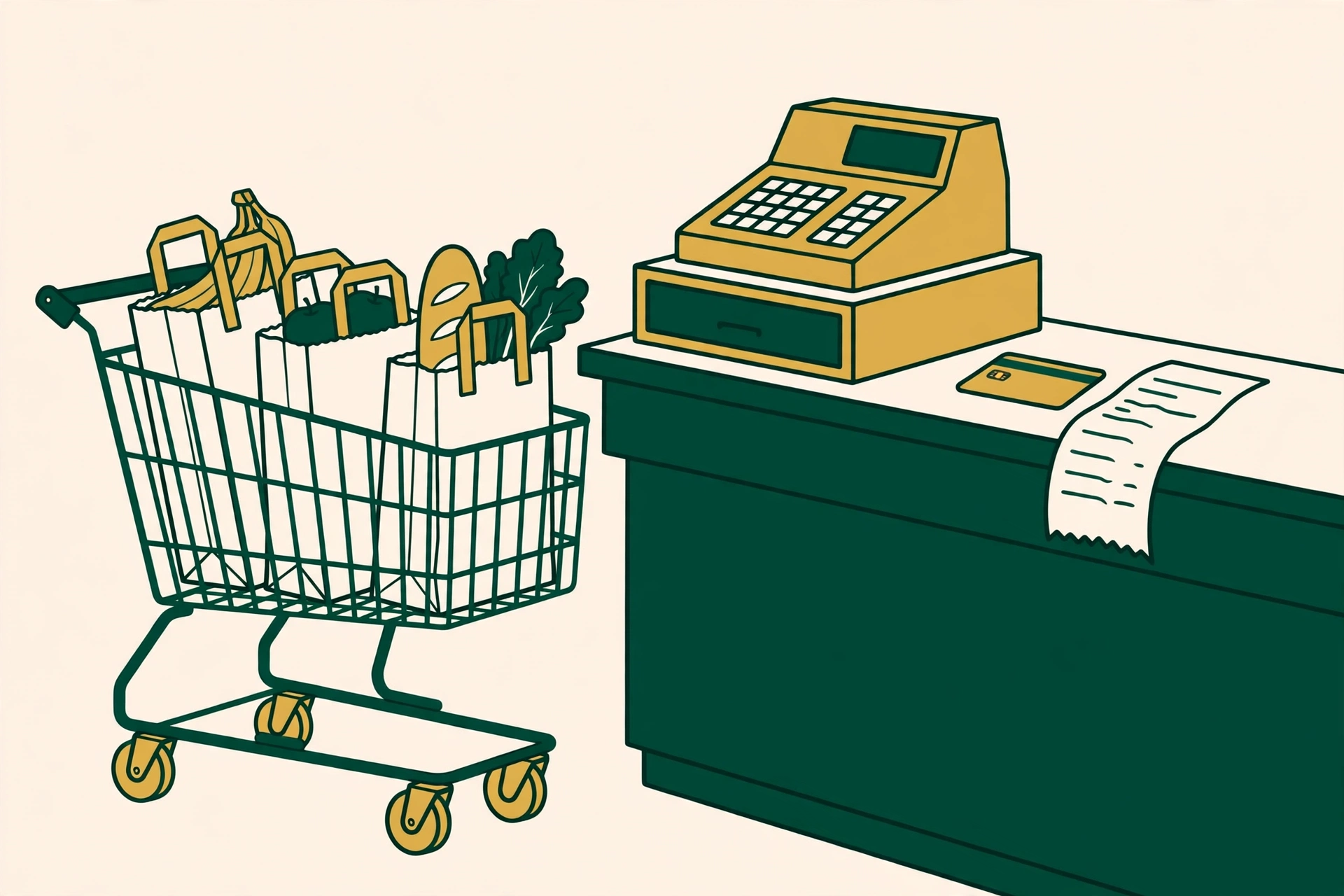
Retail sales rose 0.2% in October while prices rose 0.4%. Americans are still spending — the question is how much of it is buying, and how much is borrowing.
5 min read
Retail sales rose 0.2% in October. Prices rose 0.4%.
Read those two numbers together and you have the American consumer in one line: spending more, and quite possibly bringing home less.
The Census Bureau reported Tuesday that retail and food services sales reached $748.2 billion in October, up 0.2% from September and 6.8% from a year earlier. September’s gain, by comparison, was a much stronger 0.8%.
Two honest caveats before anyone declares a trend. The Census Bureau’s own margin on that 0.2% is plus or minus 0.4 points, so October’s growth is statistically indistinguishable from flat. And the figures are not adjusted for inflation. They count dollars, not goods.
That second point is the story. The Bureau of Labor Statistics put October price growth at 0.4%, and grocery prices rose 0.5%. When prices rise faster than sales, part of what gets reported as consumer strength is the same cart at a higher total.
A family can spend more this year than last and stock the same refrigerator. The register records a gain. The family experiences a squeeze. Both are true, and only one of them shows up in the headline.
The consumer is not one person
There is no single American shopper pushing one enormous cart. There are millions of households living in different economies.
A homeowner with a low fixed-rate mortgage and little debt has room to spend, and a rising stock portfolio makes that room feel bigger. A younger family carrying card balances, paying today’s mortgage rates, and covering childcare lives somewhere else entirely.
Both households feed the same sales total. One is shopping because it can. The other is shopping because it has to.
That split helps explain the year’s strangest pairing: respectable spending numbers alongside stubborn frustration about affordability. Recent spending has leaned heavily on higher-income households, while households with thin savings cushions absorb the price and borrowing-cost pressure. The national total averages the two realities together and describes neither.
Selective, not stopped
October’s details show a shopper getting particular. Sales at motor vehicle and parts dealers fell 1.6%. Furniture and home furnishings stores fell 2.3%. Online and other nonstore retailers rose 1.2%.
Big-ticket purchases can wait. Essentials, and the buy button, cannot.
The honest counterweight: the core sales measure that feeds into GDP — excluding autos, gasoline, building materials, and food services — rose 0.6% in October, better than economists expected. Underneath a soft headline, everyday spending held up. This consumer is bending. The data does not say breaking.
The plastic underneath
Not every dollar spent is a dollar already earned, and the borrowing is at a record. Credit card balances reached $1.29 trillion in the third quarter, the Federal Reserve Bank of New York reported last week, up $22 billion in three months.
The caution cuts both ways. Balances are growing at their slowest pace since 2021, and the flow of borrowers falling seriously behind actually eased. But 5% of all household debt now sits in some stage of delinquency, the highest share since 2016, and a carried balance compounds at card rates averaging above 22%.
Retail sales record the purchase immediately. The consequences arrive on a statement, later, with interest.
What to watch
This week the retailers report: Target, Lowe’s, TJX, and Walmart. Watch the mix rather than the earnings headlines — essentials against discretionary, and whether the discount chains say they are winning customers who used to shop somewhere else. That is where a selective consumer shows up first.
The next retail sales report arrives December 16. By then, the holiday season will have graded October’s homework.
Winners
- Online sellers — nonstore sales rose 1.2% in a month when big-ticket stores fell.
- Discount and off-price chains — a shopper who compares everything is their natural customer.
- Households with room to choose — no card balance and a cheap fixed mortgage turn this economy into a sale.
Losers
- Big-ticket retailers — autos and furniture led October’s declines, down 1.6% and 2.3%.
- Anyone revolving a card balance — a record $1.29 trillion is compounding at rates above 22%.
- Stores counting on December to fix the year — October’s customer is choosing carefully, and promotions are doing more of the persuading.
⚡ Spark Takeaway: Spending is not the same as affording. The cash register counts every dollar the same — the one earned, the one stretched, and the one borrowed at 22%. October’s register rang. The statements arrive in January.
Sources
- U.S. Census Bureau, Advance Monthly Retail Trade Survey, October 2026 (released Nov 17, 2026): +0.2% month over month, $748.2 billion, +6.8% year over year, September unrevised at +0.8%; motor vehicle and parts dealers −1.6%; furniture and home furnishings −2.3%; nonstore retailers +1.2%; stated margin ±0.4 points on the monthly change. https://www.census.gov/retail/marts/www/marts_current.pdf
- Reuters, “US retail sales increase moderately in October” (Nov 17, 2026): core retail sales +0.6% against a 0.4% forecast; households pulled back on motor vehicles and big-ticket goods.
- U.S. Bureau of Labor Statistics, Consumer Price Index, October 2026 (USDL-26-1685, Nov 10, 2026): CPI-U +0.4% month over month; food index +0.5%.
- Federal Reserve Bank of New York, Quarterly Report on Household Debt and Credit, Q3 2026 (Nov 10, 2026): credit card balances $1.285 trillion (+$22 billion in the quarter, +$52 billion year over year, slowest growth since 2021); total household debt $19.1 trillion; 5.0% of outstanding debt in some stage of delinquency.
- Federal Reserve G.19 (August 2026): average APR on card accounts assessed interest, 22.36%.
LISTEN TO THIS STORY
Marcus Bell’s AI voice reads his story, 6:02.
Listen on Apple Podcasts · Listen on Spotify · Subscribe in another podcast app
KEEP READING
- First-Time Buyers Are 40 Now, and One in Ten Paid Cash
- The Housing Market Didn’t Crash. It Froze.
- Houthis Hold the Strait. Oil Barely Moved.
New posts by email
One short email when a new Financial Spark story publishes. No newsletter, no spam — unsubscribe anytime.