6 min read
THE SUNDAY EDITION
Everyone agrees AI is the future. Wall Street is starting to wonder what that future will cost.
Wall Street has a habit of falling in love with a good story. And for the past few years, artificial intelligence has been about as good a story as anyone could ask for.
The technology is remarkable, the possibilities seem endless, and nearly every major company has found a way to work AI into its business strategy. Investors have largely gone along for the ride, rewarding ambitious spending plans and promises of enormous future profits.
It’s been a pretty good arrangement. At least until someone started asking about the bill.
That was the mood on Wall Street this past week, as technology stocks stumbled and investors took a harder look at what the AI boom is actually costing. The Nasdaq dropped 2.6% on Thursday, its worst day since June, with some of the biggest names in technology taking a hit.
The technology itself hasn’t suddenly become less impressive. What seems to be changing is investors’ willingness to assume that spending extraordinary amounts of money today will automatically translate into extraordinary profits tomorrow.
And the amounts involved are getting difficult to comprehend.
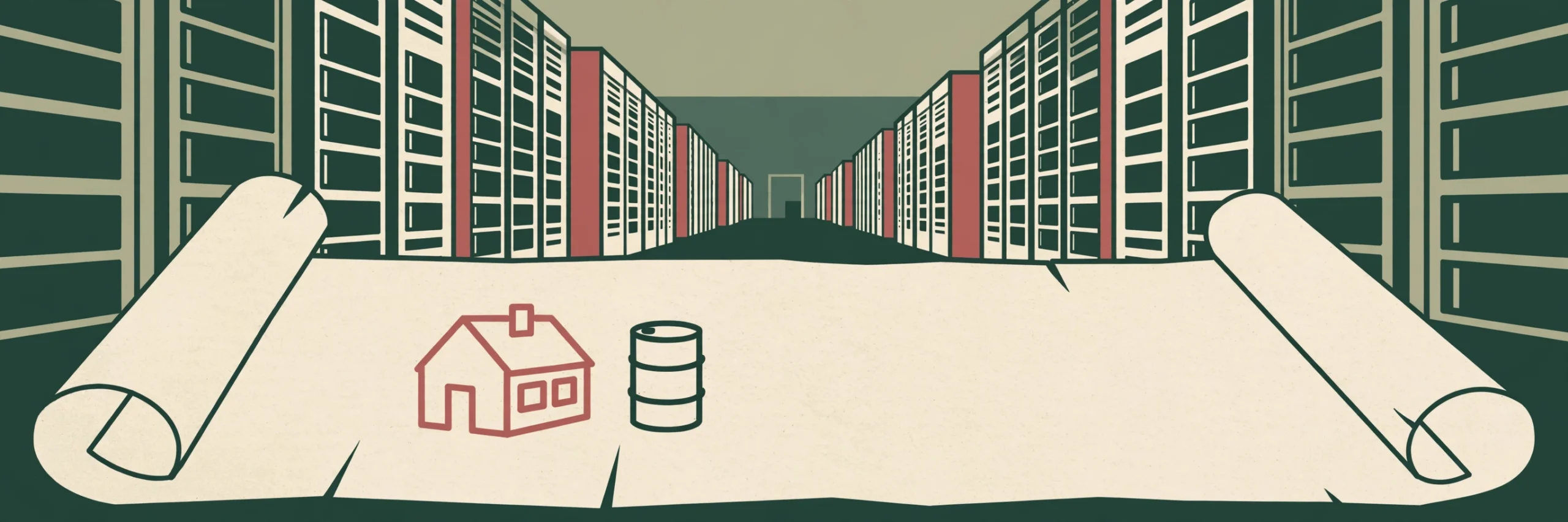
The largest technology companies are pouring hundreds of billions of dollars into data centers, specialized chips, power infrastructure, and the equipment needed to keep it all running. Goldman Sachs puts this year’s spending by the major AI infrastructure builders at roughly $800 billion.
Eight hundred billion dollars. In a single year.
That’s an awful lot of money to spend before you know exactly how much customers will ultimately pay for what you’re building.
To be fair, there’s already plenty of evidence that AI is a serious business. Cloud computing revenue is growing rapidly, companies are finding real uses for the technology, and demand for computing power remains strong. This isn’t a collection of businesses with little more than a clever name and a website.
But I keep coming back to the distinction between a great technology and a great investment. They’re not necessarily the same thing.
Remember the internet boom of the late 1990s? Investors were right about the big picture. The internet did change practically everything. Shopping, banking, communication, entertainment. It’s hard to imagine daily life without it.
What investors weren’t particularly good at was figuring out which companies would actually make money from that transformation.
Plenty of people recognized the future and still managed to lose a fortune investing in it.
AI isn’t a repeat of the dot-com era, at least not in any simple sense. Microsoft, Alphabet, Amazon, and Meta are established businesses with enormous revenues and the financial resources to pursue projects that smaller companies could only dream about.
Still, having deep pockets doesn’t make an investment worthwhile. It just means you can afford to make a very expensive mistake.
One thing I find particularly interesting is how quickly the conversation around AI has changed. Not long ago, announcing another multibillion-dollar investment was practically a reason for celebration. More spending meant more ambition, more growth, and presumably more profits somewhere down the road.
Now investors are starting to question whether all that spending is sustainable.
Some of these companies are increasingly relying on borrowing to finance their expansion. That’s not inherently a problem, but it adds another layer of risk. Data centers are expensive to build, technology becomes obsolete quickly, and interest payments have a way of showing up whether the anticipated revenue does or not.
We keep a running tally of that gap on The AI Bubble Watch — the spending against the AI revenue actually disclosed, and what it would take for the story to break.
There’s also the possibility that AI becomes so widely available and competitive that the companies providing it struggle to charge the prices they originally envisioned.
Think about how quickly we’ve gone from being amazed that a chatbot could write a decent email to being mildly irritated when it takes more than a few seconds to respond.
Consumer expectations move fast. Profit margins don’t always keep up.
And that’s part of what makes this moment so interesting. The better AI gets, the more useful it becomes. But greater adoption could also bring more competition, lower prices, and pressure on the very businesses spending fortunes to develop it.
Of course, none of that means the AI boom is about to collapse. There’s a reasonable argument that we’re still in the early stages of something much bigger. Companies have barely scratched the surface of what AI could eventually do for productivity, medicine, scientific research, and countless other industries.
I wouldn’t bet against that potential.
I just wouldn’t assume that every dollar invested in pursuing it will be well spent.
Next week should be interesting. Microsoft, Alphabet, and Amazon are scheduled to report earnings, giving investors another opportunity to examine the numbers behind the AI enthusiasm. The Federal Reserve also meets, adding interest rates and borrowing costs to an already crowded conversation.
For a market that has spent so much time celebrating the possibilities, a little scrutiny might actually be healthy.
There’s something almost refreshing about investors asking companies to explain how they’re going to earn a return on hundreds of billions of dollars. It seems like a fairly basic expectation, although Wall Street occasionally needs reminding.
I suspect we’ll look back years from now and recognize this period as an important chapter in the development of AI. The technology will probably be far more capable than it is today, and some of the companies investing heavily now will be enormously successful.
Others may discover they spent an extraordinary amount of money building something their competitors figured out how to offer for less.
That’s the part nobody can predict with much confidence.
For now, Wall Street still seems convinced AI is the future. It’s just becoming a little less willing to pay any price to own a piece of it.
— Greg Ranieri, Editor-in-Chief